
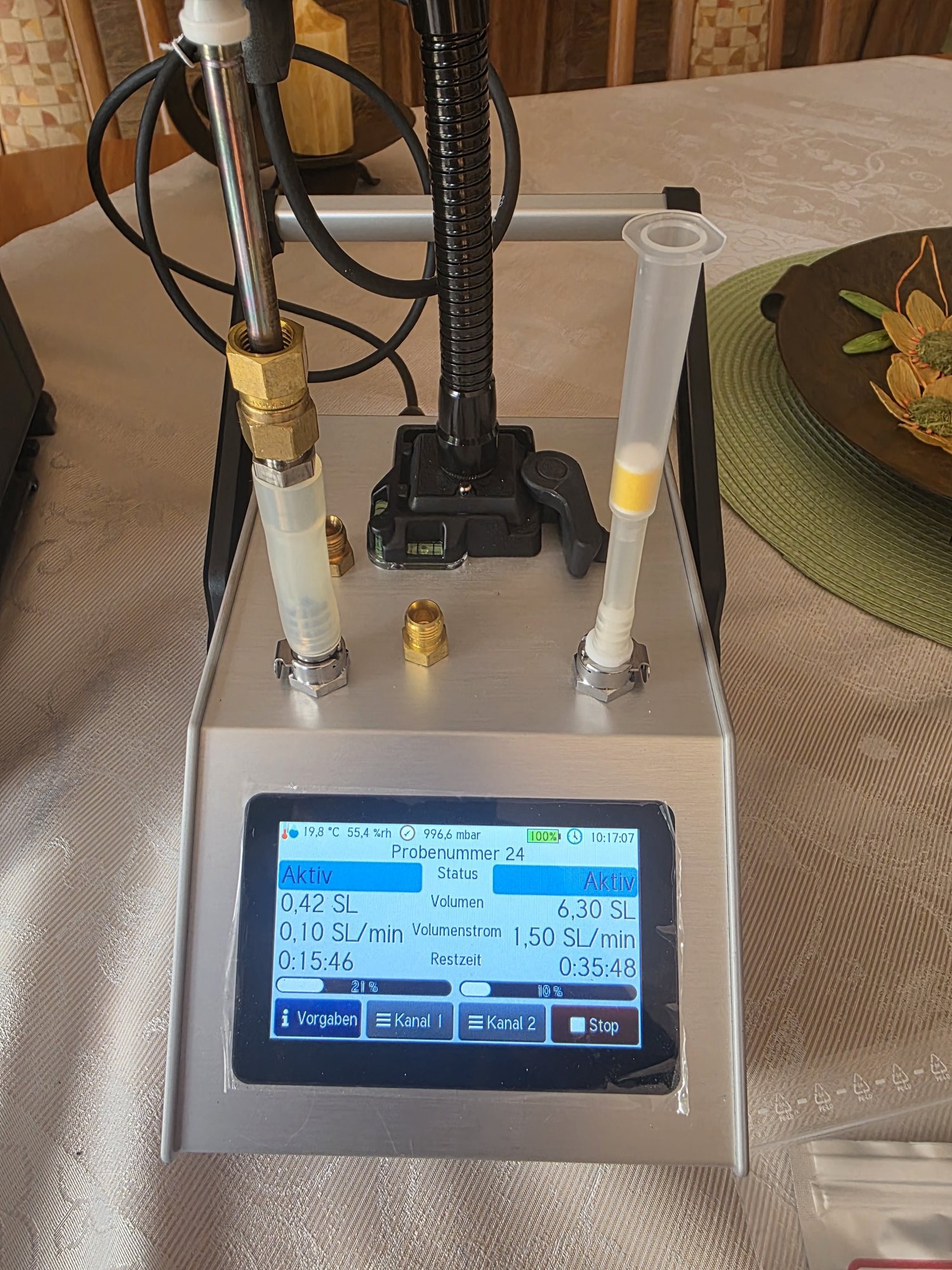
Indoor air measurements primarily serve to protect health. They make sense whenever there is a specific suspicion that pollutants from building components are entering the indoor air – or when, after remediation, it has to be proven that an area can be used safely again.
Baseline measurement
If pollutants are suspected, a baseline measurement provides clarity: is the indoor air contaminated, and if so, how badly?
Clearance measurement
After remediation, a clearance measurement proves that the work has been successful. It can also demonstrate the effectiveness of temporary protective measures. Only then is the area released in writing.
Scope of analysis
- Volatile organic compounds (VOC, TVOC) and solvents
- Asbestos and man-made mineral fibres (MMMF)
- Polycyclic aromatic hydrocarbons (PAH)
- Polychlorinated biphenyls (PCB)
- Formaldehyde
- Mould
Workplace measurements
Workplace measurements are carried out in accordance with DGUV Information 213-546, the asbestos requirements of the German Federal Institute for Occupational Safety and Health (BAuA) and EU Directive 2009/148/EC. Respirable inorganic fibres are determined using scanning electron microscopy.
- Asbestos
- MMMF
- PCB
- PAH
- TVOC
- Formaldehyde
- Mould